
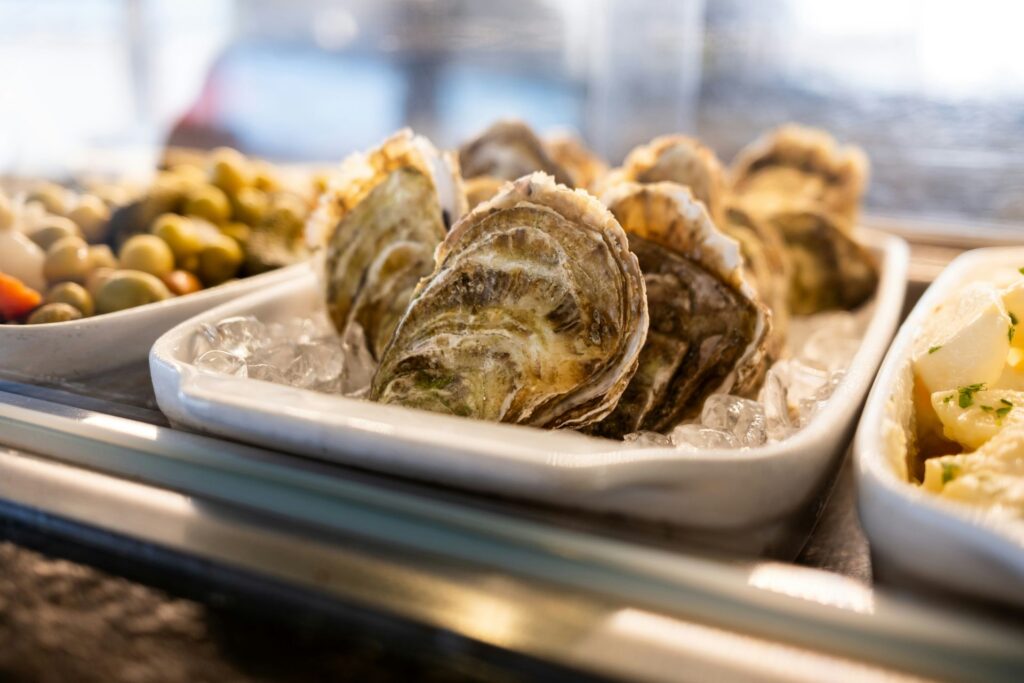
Alicante’s food culture sits right at the meeting point of the sea and the huerta, the fertile market-garden land that surrounds the city. That combination shows up on almost every menu, from rice dishes cooked with the day’s catch to vegetable stews built around what’s in season. Here’s what to look for if you want to eat like a local during your stay near Playa de San Juan, whether you are cooking for yourself or choosing where to eat out.
Rice, the Heart of the Table
Alicante province is one of the birthplaces of Spanish rice cooking, and it goes far beyond paella. Arroz a banda is cooked in a rich fish stock and served simply, often with allioli on the side. Arroz del senyoret is similar but with all the seafood already peeled, so you can eat it without getting your hands messy. For something heartier, arroz con costra is baked with an egg crust on top and typically includes pork and chickpeas. Each version reflects the same underlying idea: rice as a vehicle for whatever the sea or the land is producing that week.
Tapas and Small Plates
- Michirones: stewed dried broad beans with ham, garlic and spices, a winter favourite.
- Gazpacho alicantino: confusingly nothing like the cold tomato soup from Andalusia, this is a hearty rabbit and game stew served over a flatbread base.
- Salazones and mojama: cured fish typical of the coast, often served simply with olive oil and bread.
- Embutidos: local cured sausages, often featured on a simple sharing board to start a meal.
Something Sweet
Alicante is famous for turron, the nougat made from almonds and honey that’s a Christmas staple across Spain but produced year-round in the province. Look out too for peladillas (sugared almonds) and helado, since Alicante’s ice cream tradition runs deep thanks to its Italian heritage in nearby towns. Many bakeries also sell almond-based pastries year-round that make a good souvenir if you want to bring a taste of the region home.
Where the Locals Eat
The Mercado Central in downtown Alicante is a good starting point for understanding the local produce: fresh fish, seasonal vegetables from the huerta and stalls selling cured meats and cheeses. For a sit-down meal, family-run restaurants slightly away from the main tourist strips near the beach tend to offer more traditional cooking and better value, especially at lunchtime, when many offer a set menu that changes daily.
Seasonal Eating
Because so much of the produce comes from the surrounding huerta, menus shift noticeably with the seasons. Artichokes and broad beans dominate in late winter and spring, tomatoes and peppers take over in summer, and heartier stews built around pulses and game become more common as the weather cools in autumn and winter.
Pairing It All
Local wines from Alicante DO, particularly those made with the Monastrell grape, pair well with the richer rice and stew dishes. For something lighter on a hot day, a chilled glass of Fondillon, a historic sweet wine from the region, makes an interesting way to finish a meal instead of dessert.
Cooking Classes and Markets
For visitors who want to go beyond eating and actually learn something about the cuisine, a handful of local cooking schools in Alicante offer short paella and rice-cooking classes aimed at travellers, usually including a market visit beforehand to select ingredients. Even without booking a formal class, simply walking through the Mercado Central with no particular purpose is a good way to get a feel for what is in season and how seriously the local produce is taken, from the fishmongers shouting out the morning catch to the neat rows of huerta vegetables arranged by stallholders who have often worked the same pitch for decades.
A Short History on a Plate
Much of what defines Alicante cuisine today reflects centuries of overlapping influences, from Roman and Moorish agricultural techniques that shaped the huerta’s irrigation systems to the fishing traditions that supplied coastal towns long before tourism arrived. Rice itself was introduced to the region under Moorish rule and gradually became the staple around which so many local dishes are still built, which is part of why even small family-run restaurants take their rice preparations so seriously, often refusing to rush a dish that traditionally takes twenty minutes or more to cook properly to order.
Frequently Asked Questions
Is Alicante cuisine very spicy? No, it relies more on fresh ingredients and slow cooking than heat.
Are there vegetarian options? Yes, many huerta-based vegetable dishes and rice preparations can be made or ordered without meat or fish.
What is the best time of year to try local produce? Spring and autumn tend to offer the widest variety, though rice dishes and seafood are available year-round across the province.
Where can I buy turron to take home? Specialist sweet shops and larger supermarkets across Alicante sell turron year-round, not only around Christmas as in much of Spain.