Playa de San Juan is, without question, the crown jewel of Alicante’s coastline: nearly seven kilometres of fine golden sand, calm shallow water and a long, palm-lined promenade packed with bars, restaurants and beach clubs. But it’s far from the only stretch of coast worth your time. From family-friendly urban beaches to hidden coves tucked between rocky cliffs, this guide covers the beaches you shouldn’t miss on either side of the city, along with practical tips for choosing the right one for your day.
Playa de San Juan: The Main Event
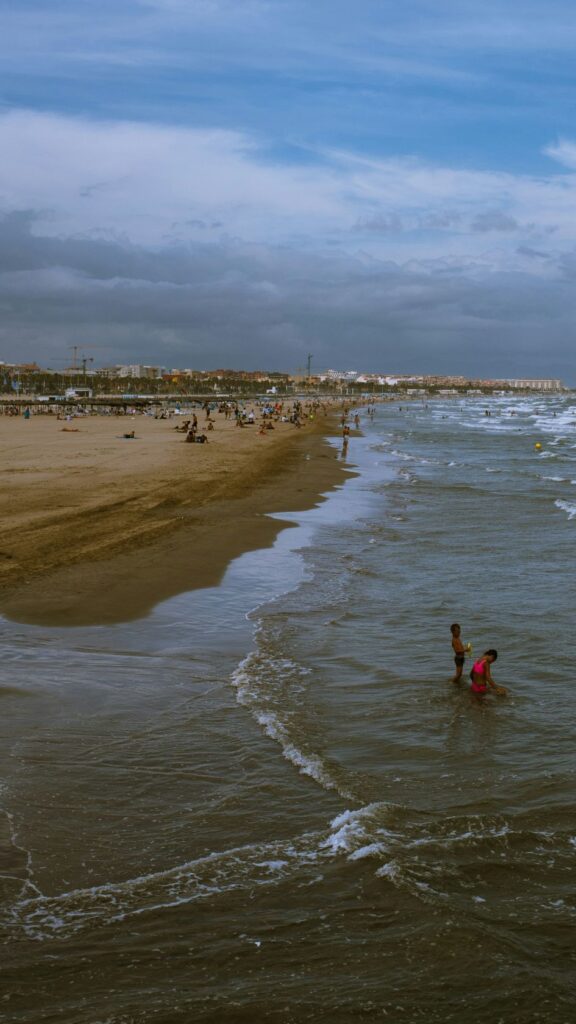
Playa de San Juan (also called Playa de la Almadraba at its northern end) is a Blue Flag beach with everything a beach day requires: showers, lifeguards in season, accessible walkways, bike lanes along the promenade and a huge choice of chiringuitos serving everything from fried fish to cocktails. The sand is fine and light-coloured, and the seabed shelves gently, which is one reason the water stays so calm and swimmable for most of the year. It gets busy in July and August, especially near the tram stops, so arrive early if you want space to spread out, or walk ten minutes further along to find quieter sections toward either end.
Playa del Postiguet: Alicante’s City Beach
Right in the heart of the city, beneath the Santa Barbara Castle, Playa del Postiguet is the most convenient option if you’re staying downtown or exploring on foot. It’s smaller and more crowded than Playa de San Juan, but the view of the castle-topped mountain rising behind the sand is hard to beat, and the Explanada de Espana with its wave-patterned mosaic pavement is just a few minutes’ walk away. Because it sits so close to the port and the old town, Postiguet works well as a quick midday swim between sightseeing stops rather than a full day at the beach.
The Coves of Cabo de las Huertas
East of Playa de San Juan, the coastline turns rockier and more dramatic around Cabo de las Huertas. Here you’ll find a string of small coves and rocky platforms popular with locals: Cala Cantalar, Cala Palmeret and La Almadraba among them. These spots have less sand and fewer amenities, but calmer, clearer water and a much quieter atmosphere, perfect for swimming and snorkelling away from the crowds. Some coves require a short scramble over rocks to reach the water, so they suit confident swimmers and older children better than very young kids or anyone with limited mobility.
Smaller Beaches Worth Knowing
Beyond the three main options, a handful of smaller access points along the coast between San Juan and the Cabo are worth knowing about if you want to avoid crowds entirely. These pocket beaches rarely appear in guidebooks, have no lifeguard service outside the busiest weeks of summer, and offer little more than sand and sea, but that is precisely their appeal for visitors who prioritise quiet over convenience.
- Best for families: Playa de San Juan, thanks to shallow water and full services.
- Best for a quick dip in the city: Playa del Postiguet.
- Best for peace and quiet: the coves around Cabo de las Huertas.
- Best for sunset: the rocky viewpoints near Cabo de las Huertas (see our sunset guide).
Getting Around
The TRAM line 1 and 4 connects central Alicante directly with Playa de San Juan, with several stops right along the beach, making a car unnecessary for most visitors. For the coves near Cabo de las Huertas, a bicycle or a short taxi ride is the easiest option, as public transport coverage is more limited. Renting a bike for the day is often the most flexible choice, since it lets you check several beaches in a single outing without worrying about parking.
Practical Tips
Between June and September, sunbeds and umbrellas can be rented directly on Playa de San Juan, and lifeguard towers are staffed daily. Outside high season, services are reduced or closed, but the beaches themselves are open year-round and popular with walkers and swimmers even in winter. Whichever beach you choose, bring reef-safe sunscreen and plenty of water, since shade is scarce along most of this coastline, and midday sun between June and August can be intense even for short visits.
Where to Stay Nearby
Most visitors base themselves directly along Playa de San Juan, where a long stretch of apartment blocks and a handful of hotels sit within a few minutes’ walk of the sand. This is the most convenient option if the beach is your main priority, with the promenade, tram stops and restaurants all close at hand. Staying closer to Cabo de las Huertas trades some of that convenience for a quieter, more residential feel, with easier access to the coves but a slightly longer walk or short bike ride to the busiest part of the promenade. Those who prefer a city base with easy access to museums, shopping and nightlife often choose central Alicante instead, using the tram to reach the beach in around fifteen minutes.
Frequently Asked Questions
Is Playa de San Juan good for young children? Yes, the shallow, gently sloping water and lifeguard presence in season make it one of the safer options on this coast.
Are the coves near Cabo de las Huertas free to access? Yes, all beaches along this coastline are public and free, though the coves have no rental services or facilities.
Do I need a car to beach-hop along this coast? No, the tram and a bike are generally enough to reach every beach mentioned here.